DENTAL ANTIQUES:
PELICANS, TOOTHKEYS, AND FORCEPS
Alex Peck Medical Antiques
All pictures and text on this site are copyrighted ©1982-2025 Alex Peck. All rights reserve.
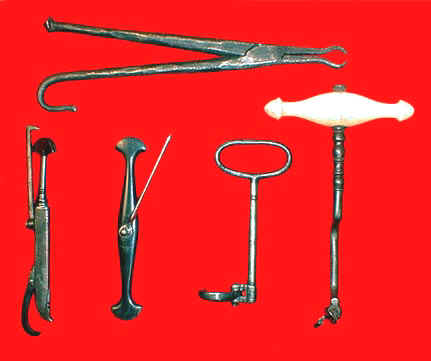
Antique dental instruments can be found in many forms. Three of these are forceps, pelicans, and toothkeys.
The forceps is one of the earliest extracting instruments The example shown here across the top of the photograph dates to the 1500s and was made by a blacksmith.
The two instruments to the left are pelicans, so-called because their shape reminded people of a pelican's beak. The instrument to the far left incorporates two different types of pelicans and dates to the 1770s. It was made by John Rogers of Newton, Massachusetts. The second pelican has a shaped-horn body and a removable arm. It is marked Collin, a French maker, and it dates to the 1860s.
The two instruments to the right are called toothkeys: they resemble to eighteenth century door keys. The toothkey with a ring handle dates to c 1750. The ivory-handled key is from c. 1830s.
_______________________
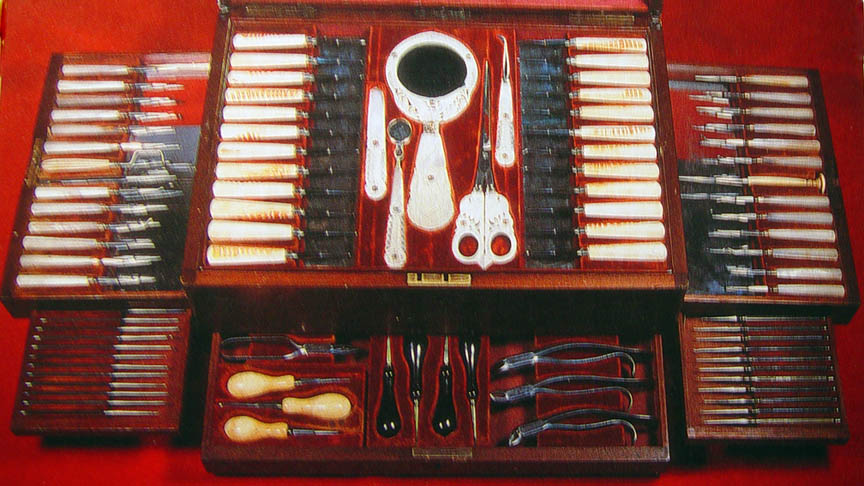
A c. 1860 antique dental chest by H.G. Kern, Philadelphia. Note the fancy mother-of-pearl instruments in the top section.
_____________________________
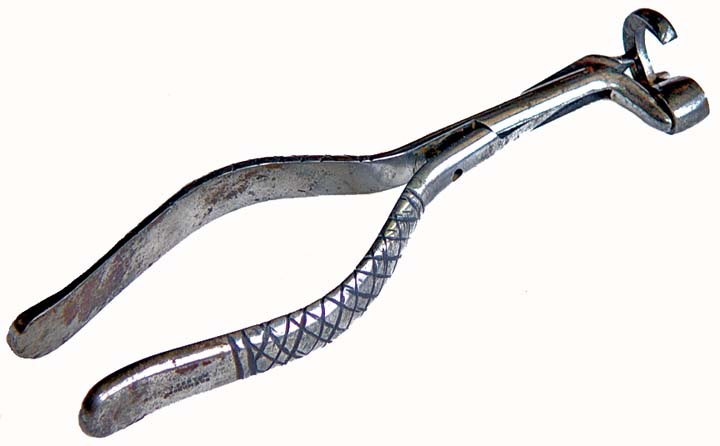
A scarce antique dental forceps-key extractor marked: BAKER & RILEY / PATENTED 1845 // J. FENTON / COLUMBUS [OHIO]. The instrument is a combination of the attributes of the an extracting forceps and a toothkey. Squeezing the grip controls the claw, an action which must be done with a finger to the claw on a regular toothkey. On 8 November 1845 John Wilson Baker and William Willshire Riley, both of Columbus, were issued patent number 4,261 for an Instrument for Extracting Teeth. This dealer is aware of only one other example of a Baker and Riley patented dental forceps-key. The dental instrument maker John Fenton was active in Columbus from 1843 to 1863, as cited in Edmonson, p. 250.
__________________________________________
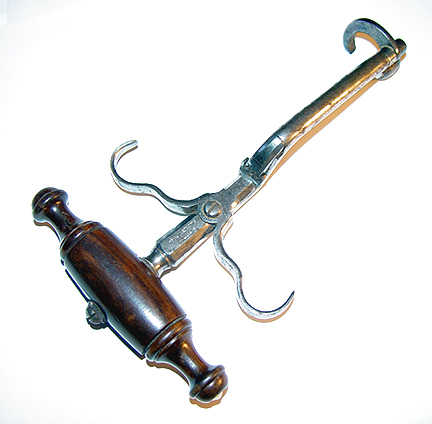
A superb and exceeding rare American mechanical toothkey marked: H. TODD'S / PATENT 1846. The antique dental instrument features a rocker arm that opens and closes the claw. The rosewood handle has mother-of-pearl inserts on each end. There is nothing similar in Bennion to this most intriguing and important American dental antique.
______________________________________________
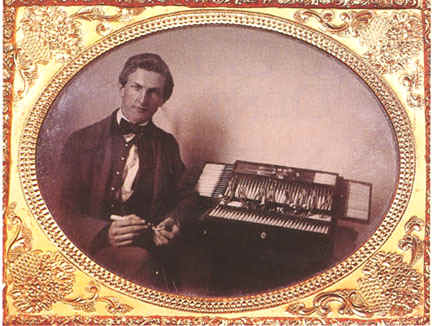
A superb c. 1860 sixth-plate ambrotype of a young dentist with his extensive set of dental instruments.
_________________________________________________________
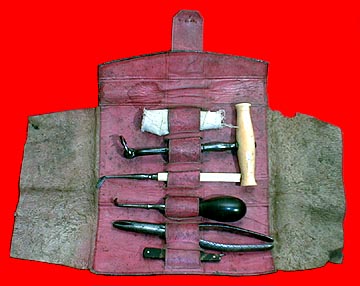
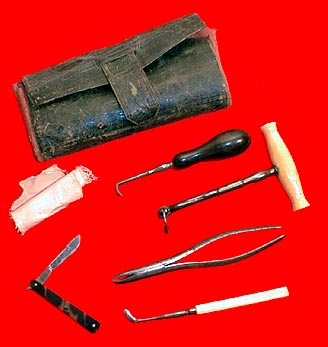
A fine c. 1850 American dental wallet with ivory-handled toothkey and gum lancet, an elevator, an extracting forceps, and a folding scalpel. The antique toothkey has a lever system for locking the rotating bolster and claw.
_______________________________________
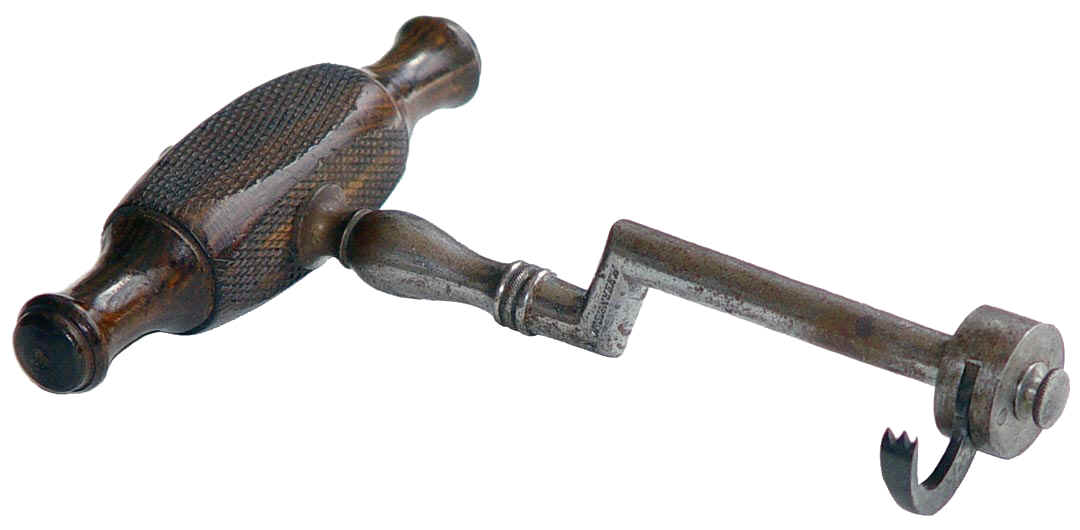
A high quality c. 1850 antique dental toothkey marked: H. HERNSTEIN. This handsome dental antique has an exaggerated dog-leg shaft and a removable rotating and reversible fulcrum that allows the claw to be adjusted to whatever tooth is to be extracted. The handle is checked-coromandel. At 6.5 inches (16.5 cm) long, this is relatively large toothkey. The dental and surgical instrument maker Hermann Hernstein was active in New York City from 1843 to 1861. Signed American toothkeys are scarce. See Edmonson, p. 220.
_______________________________
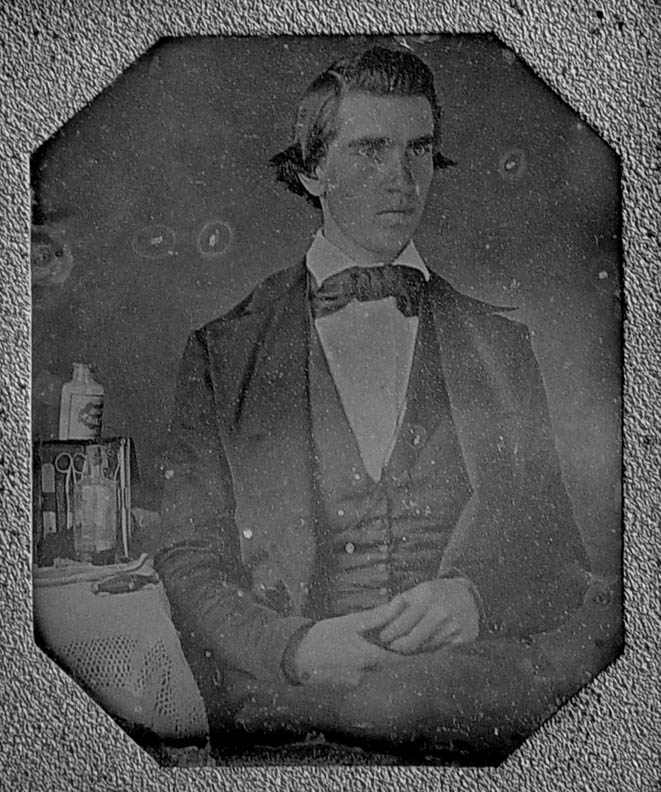
A c. 1840s daguerreotype of a young medical student or doctor with minor surgery set, medicine bottles, dental forceps, and toothkey.
_________________________________________
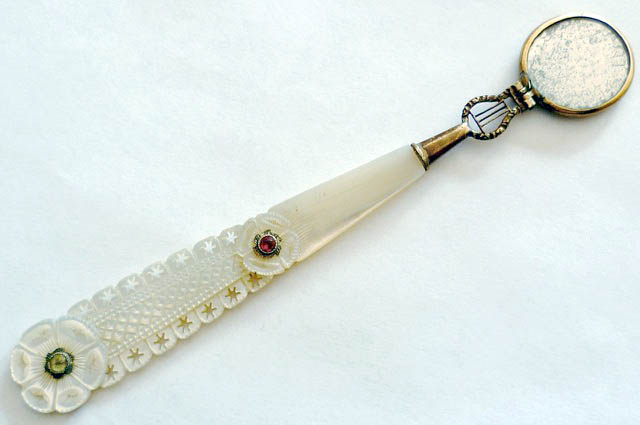
Antique dental mouth mirror by SS White, New York. The handle is mother-of-pearl and set with jewels.
________________________________________________
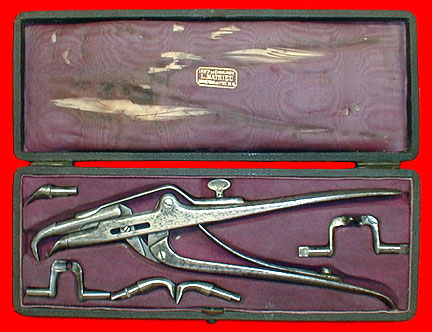
An important and exceedingly rare c. 1860s dental pelican marked: ATTRACTIF / DE D'ESTANQUE and MATHIEU / A PARIS. The set has all 9 of its interchangeable jaws, and it is the most complicated mechanical tooth extractor shown in Bennion. See Bennion, Dental Antiques, p. 38 and 63, fig. 65.
__________________________________________
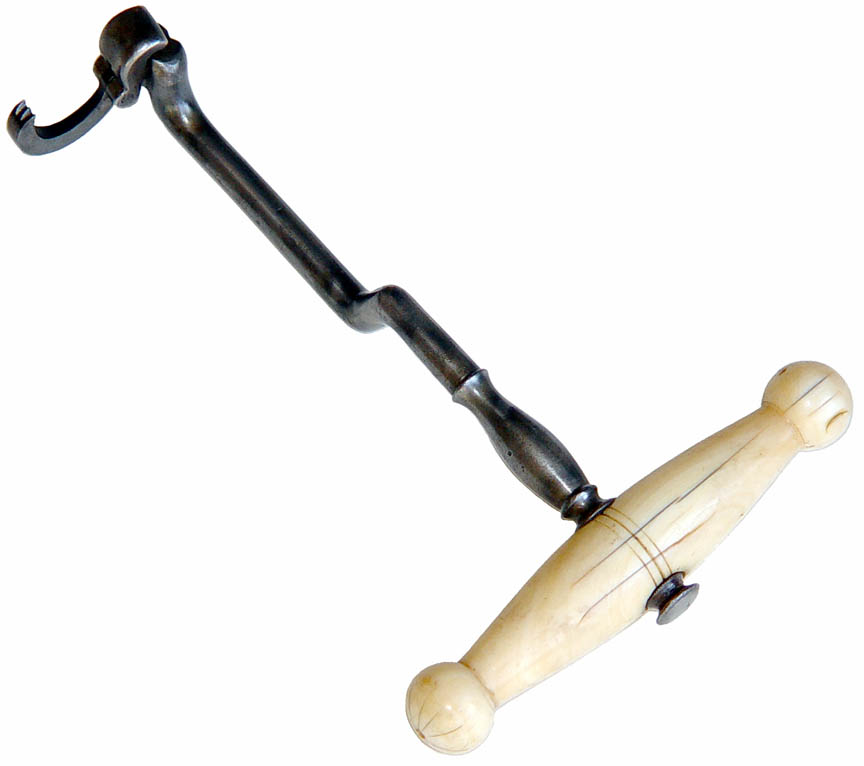
A fine c. 1840 ivory-handled antique dental toothkey. This dental tooth extracting instrument has an unusual dimpled and rotating bolster and claw.
________________________________
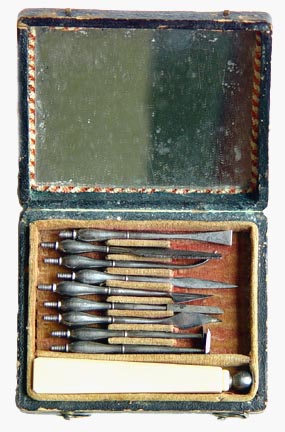
A c. 1820 antique dental scaling set with nine attachments that screw into a hippo ivory handle. The antique dental hygiene set is complete and includes its original case with mirror.
________________________________________
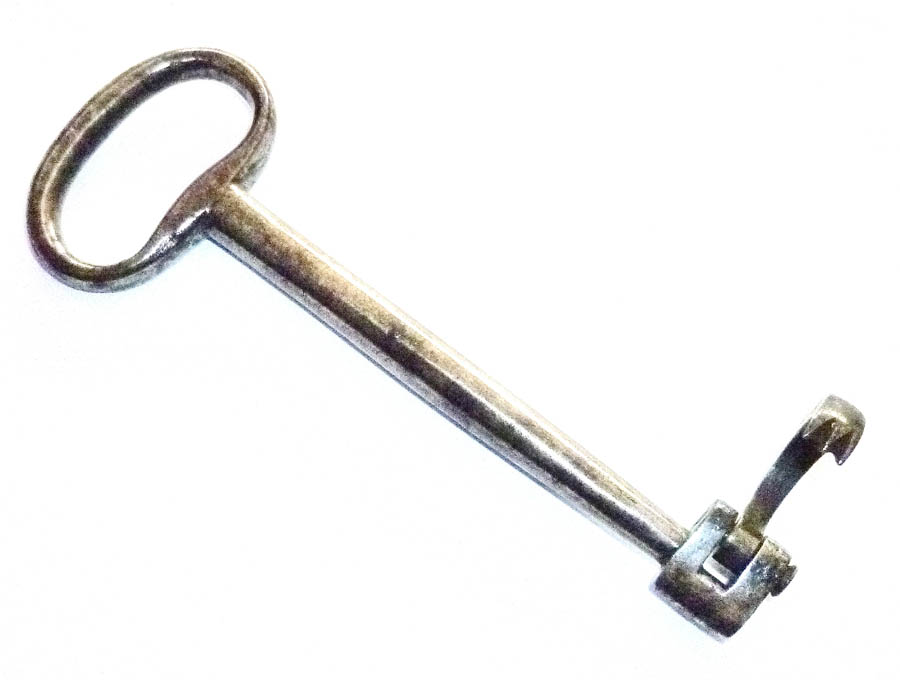
A c. 1750 iron ring style antique toothkey.
__________________________________________

A c. 1860s tintype photograph of a dentist with dental instruments.
______________________________________________
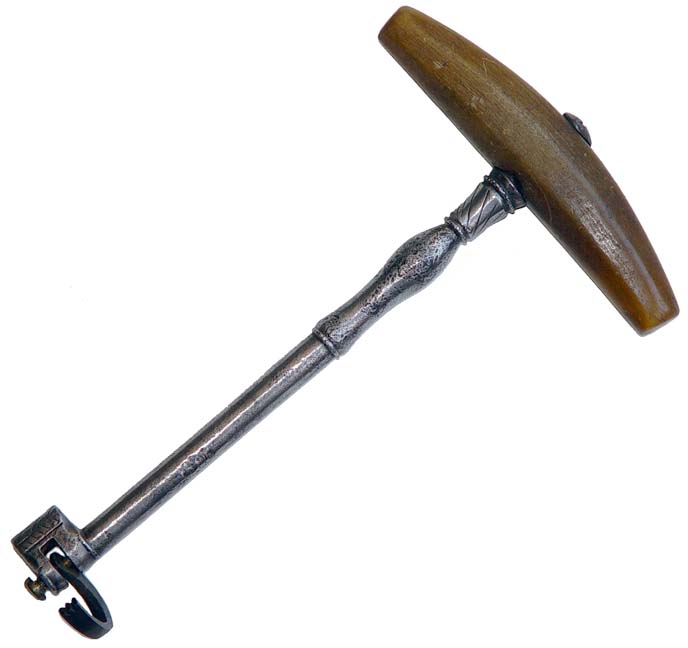
A c. 1820 antique dental toothkey with bow-shaped horn handle and cut-work on the steel shaft.
___________________________________
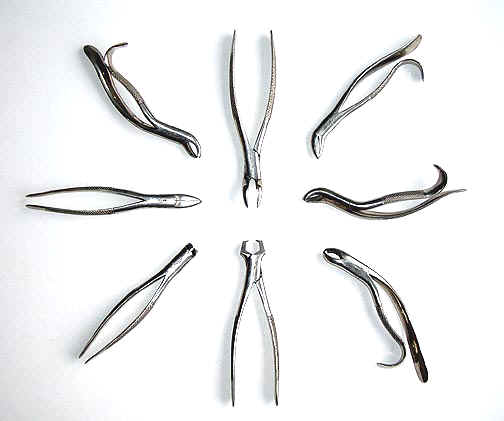
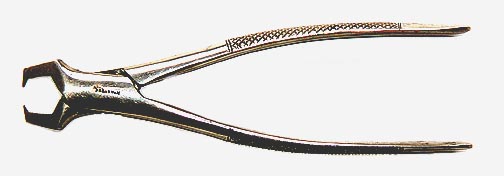
A selection of c. 1890 dental forceps by Chevalier, New York. Included is a Cyrus Fay's antique dental upper excising forceps which was introduced c. 1835. Fay (1778-1839) was award a silver medal by the Society of Arts for its design. Besides being a dental instrument maker, Chevalier is renown for its American bowie knives.
________________________________
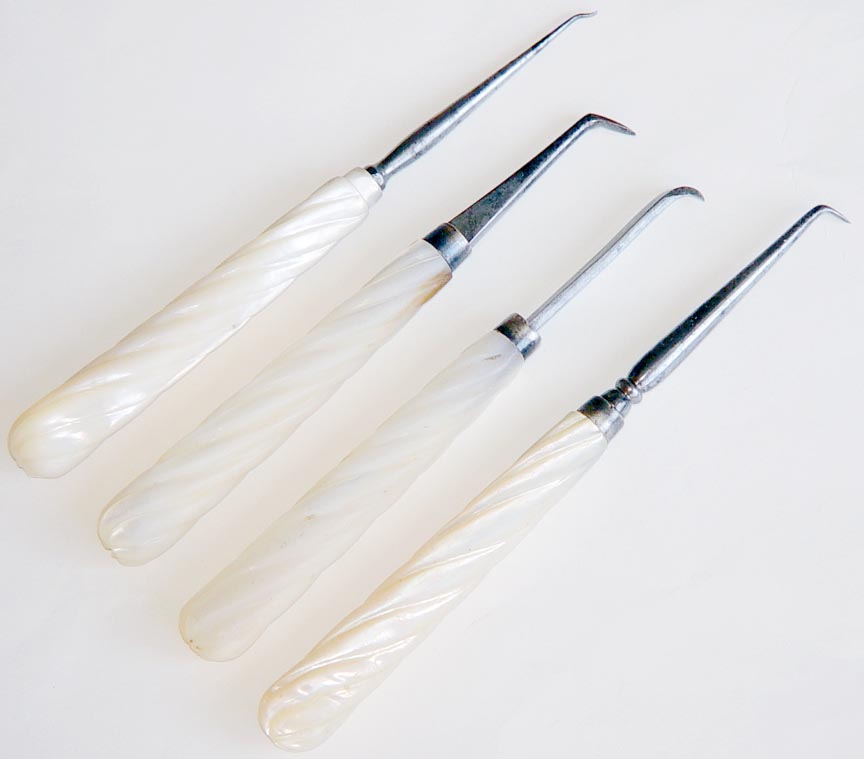
A handsome group of four c. 1840 antique dental instruments with spiral-carved mother-of-pearl handles.
__________________________________________

A c. 1600 antique dental pelican.
__________________________________________
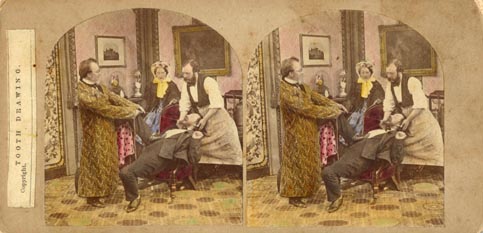
A c. 1860 hand-colored stereoview titled Tooth Drawing. The backmark is that of James Cremer, Philadelphia.
____________________________________
Archives Articles Collecting Alerts
For additional dental instruments and other medical antiques, visit the various sections of this web site.