MEDICAL ANTIQUES ARCHIVES
All pictures and text on this site are copyrighted ©1982-2025 Alex Peck. All rights reserved.
PAGE 60
________________________________
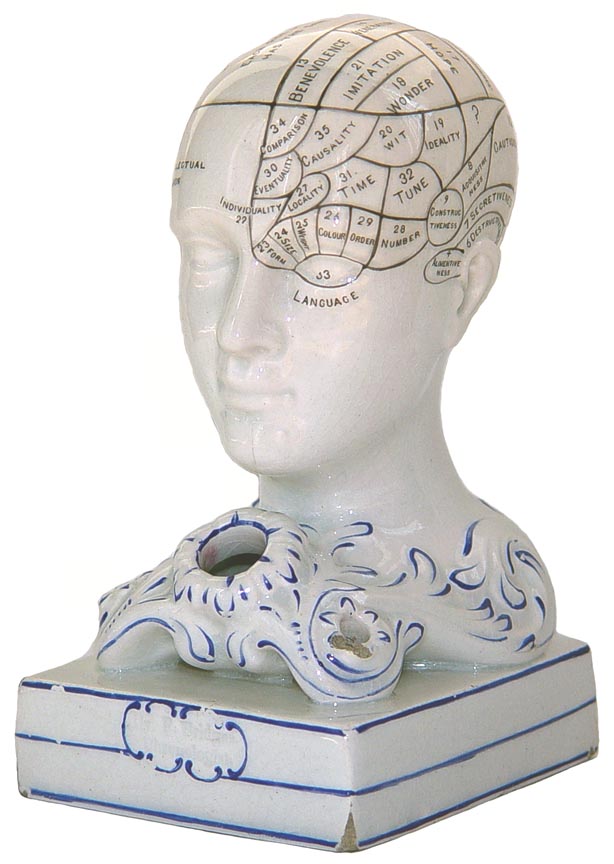
A c. 1850 antique phrenology bust inkwell embossed along the front: By F. Bridges / Phrenologist. 14cm tall.
___________________________________________
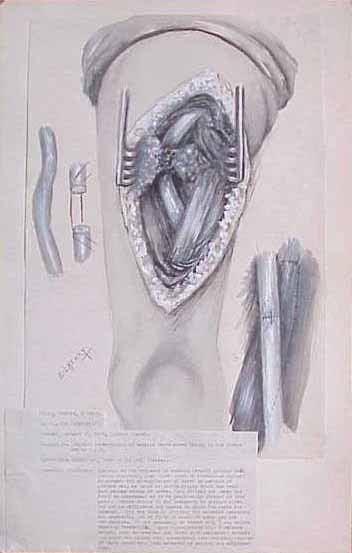
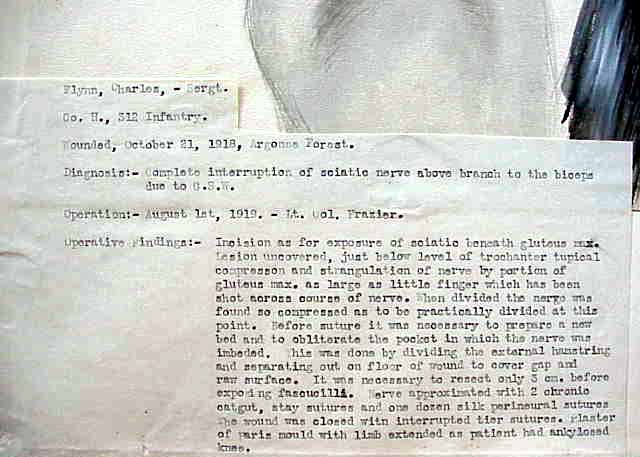
An original illustration and description of a WWI surgical operation performed by Lt. Col. Charles Harrison Frazier (1870-1936), a pioneer American neurosurgeon. The patient suffered a gunshot wound at the Argonne Forest, 21 October 1918. Nearly a year later, Surgeon Frazier operated on the damaged sciatic nerve at the U.S. Army base hospital at Cape May, New Jersey, or at Fox Hills, Staten Island, New York. For biographies of Dr. Frazier, please click to these sites: A. and B. The artist is E.L. Henry.
__________________________________
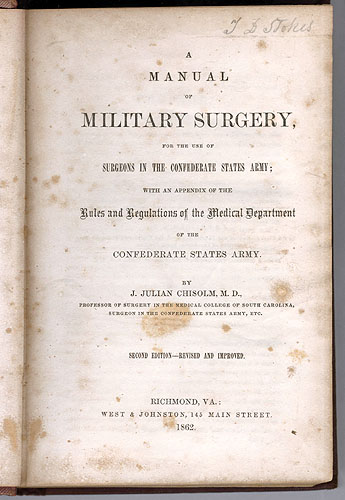
J. Julian Chisolm, A Manual of Military Surgery for the Use of Surgeons in the Confederate States Army. 2nd ed. 514 pp. Richmond: West & Johnson, 1862. Chisolm (1830-1903) was the foremost surgeon in the Confederacy, and his important military surgery manual went through three editions. This Civil War book is signed and dated by the original owner: T[homas] D. Stokes and June 7th 1862. Dr. Stokes (1817-1886) was born in Caswell Co, North Carolina, and practice and died in Danville, Virginia. He was an 1839 graduate of the University of Pennsylvania. This Confederate manual is in fine condition and has its original binding, medical forms, and foldout.
______________________________________________
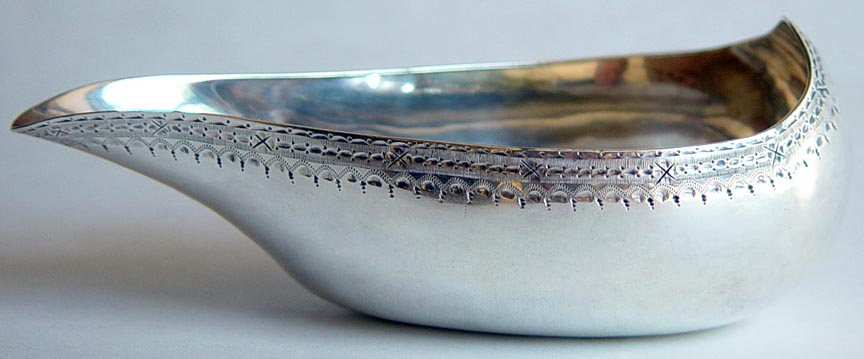
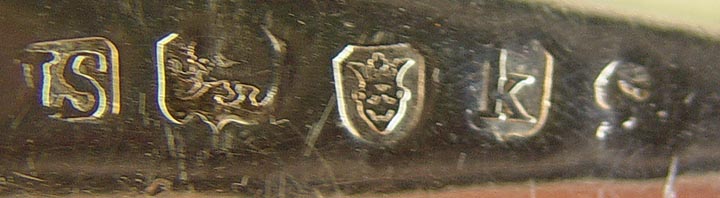
A superb antique pap boat with hallmarks for the London maker James Stamp and the date 1785/6. Note the decorative bright cut design along the border of this infant and invalid feeder.
______________________________________
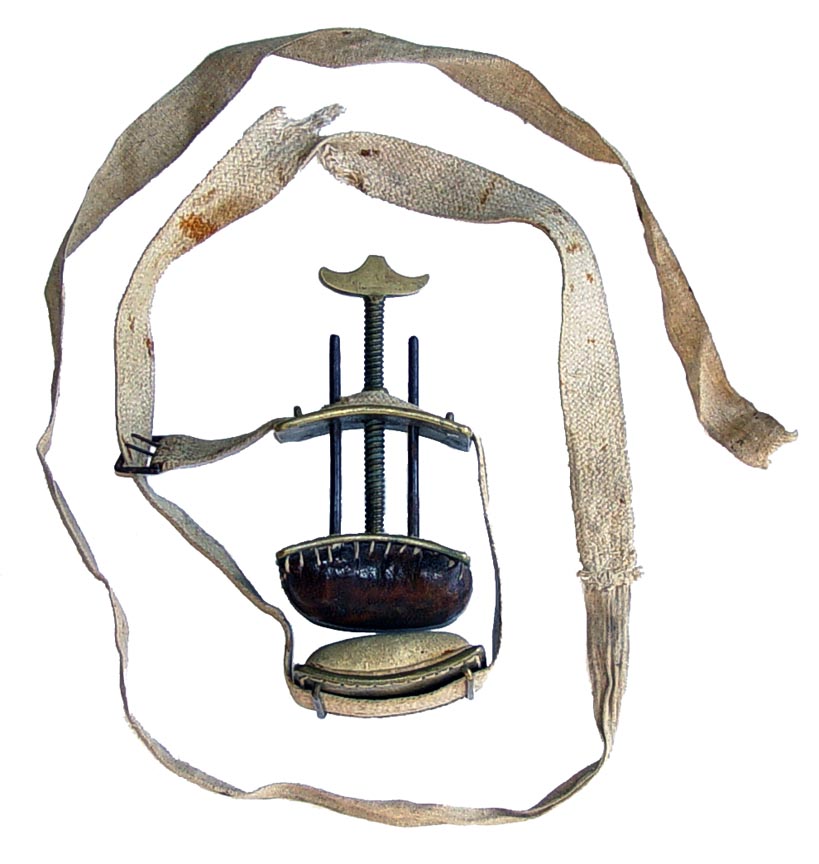
A very rare c. 1770 antique tourniquet with brass frame and original leather pads and woven linen strap. This classic Revolutionary War period tourniquet is of the pattern found in Jean-Jacques Perret, L'Art du Coutelier, Paris, 1772.
_______________________________________
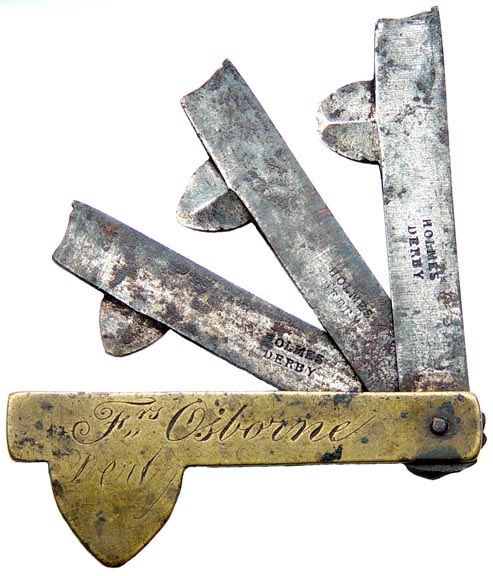
A c. 1850 antique bloodletting fleam by Holmes, Derby, England. The brass case is beautifully hand-engraved: Fr[anci]s Osborne / Derby.
___________________________________
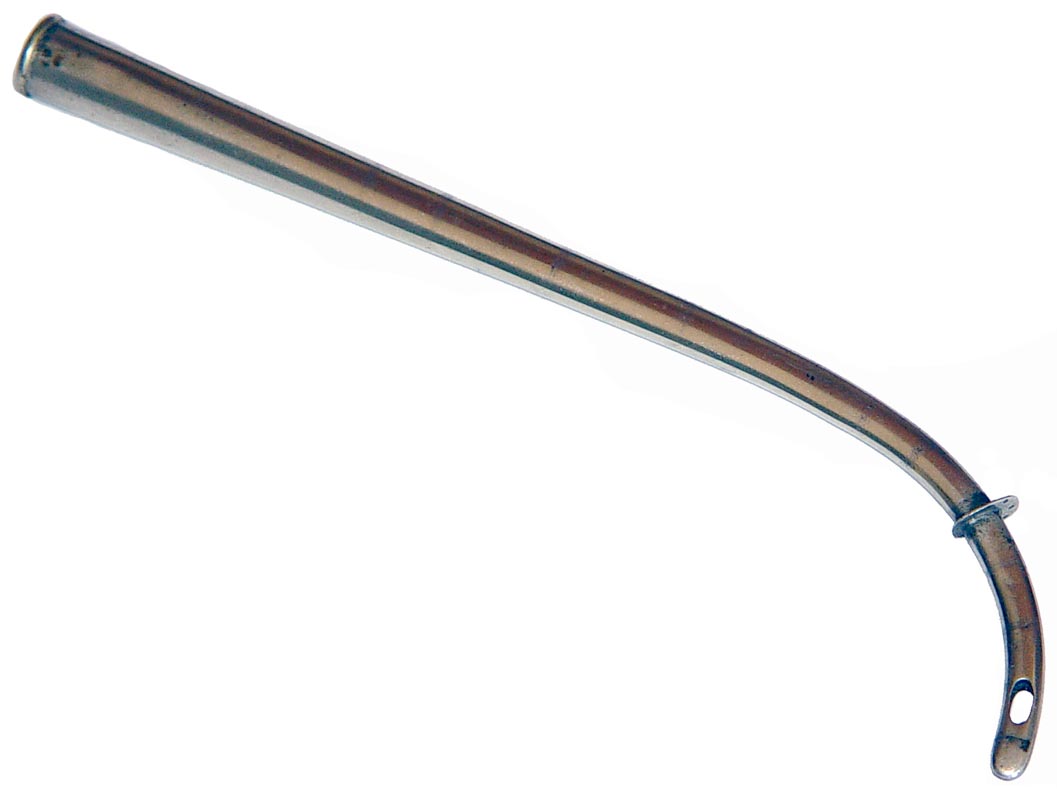
A neonatal resuscitation silver tube of Chaussier with lateral openings, as introduced c. 1806 by Dr. François Chaussier (1746-1828), a professor at the École Polytechnique, and a chief obstetrician at the Paris Maternité. A natural sponge seal once stitched to and around the collar above the fenestration has perished. See G.-L. Witkowski, Histoire Accouchement, Appendice, p. 168, fig. 1082 (E).
______________________________________________________
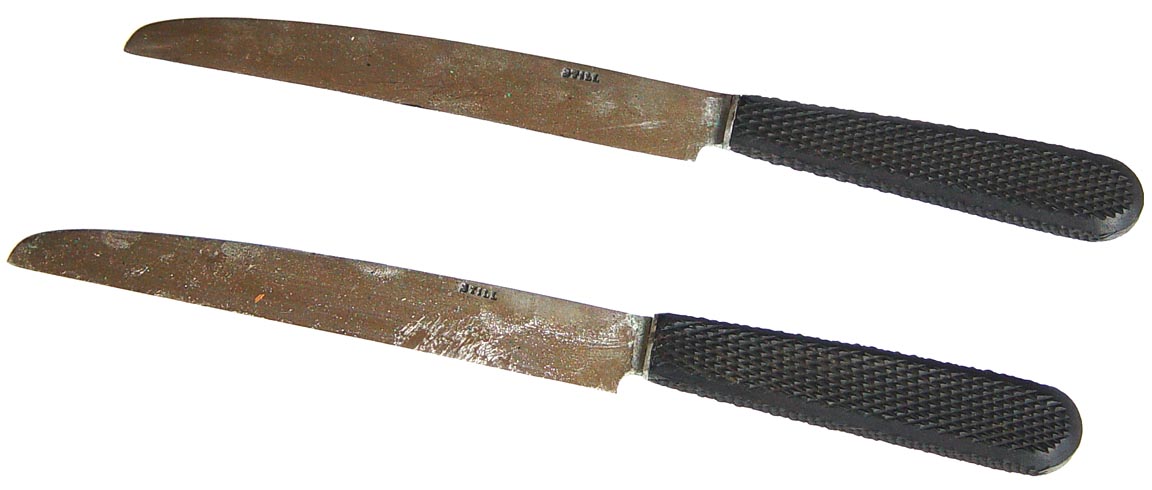
A pair of antique circular amputation knives with ebony handles. Each blade is marked STILL for Alexander Still, an Edinburgh surgical maker active from the late 1700s to the 1830s. The steel retains a 19th century coating of protective grease that gives a brown cast in the photograph.
_______________________________________________
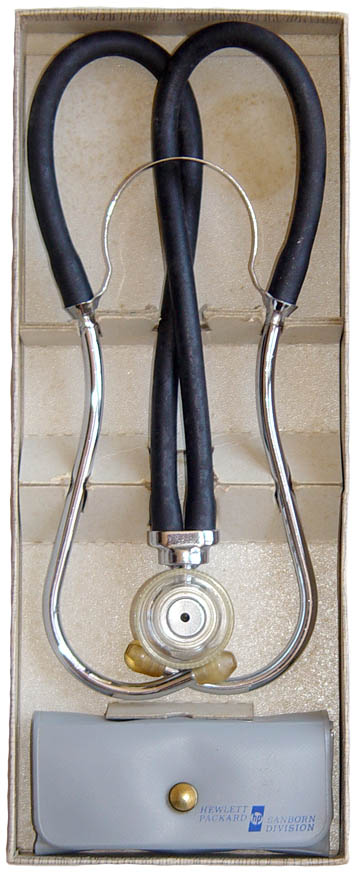
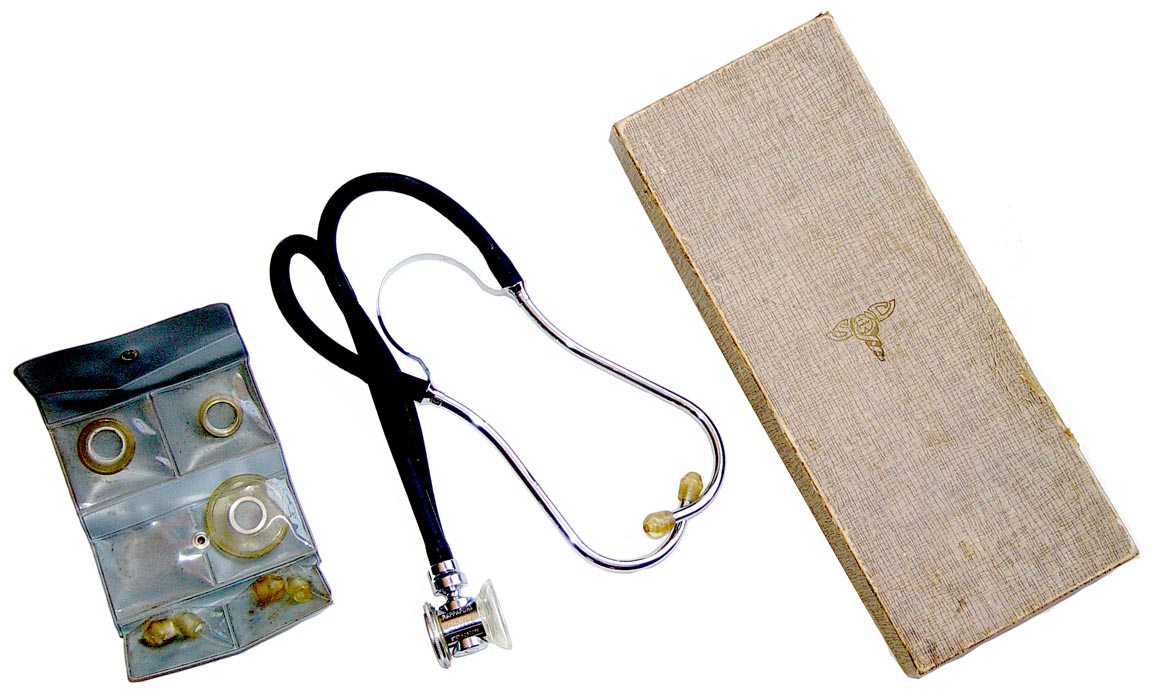
A Sanborn Company and Hewlett Packard Rappaport Sprague binaural stethoscope set that dates to the early 1960s. The chestpiece is marked: RAPPAPORT / SPRAGUE / STETHOSCOPE // SANBORN / COMPANY / WALTHAM / MASS, U.S.A. The set includes a wallet marked HEWLETT / PACKARD / SANBORN / DIVISION, that holds chestpiece fittings and two sets of additional earpieces. Hewlett Packard took-over the Sanborn Company, of Boston, in 1961 and changed its name to the Sanborn Division. While HP produced the Rappaport Sprague for the next 39 years, the Sanborn Company was the original maker, following the design of Dr. Howard Sprague, a Boston cardiologist, and Maurice Rappaport, an electrical engineer and acoustics expert at Sanborn. This instrument is one of the first of the Rappaport Sprague stethoscopes to be sold by HP. The stethoscope is in unused condition and is housed in its original Sanborn Company cardboard box.
_______________________________________
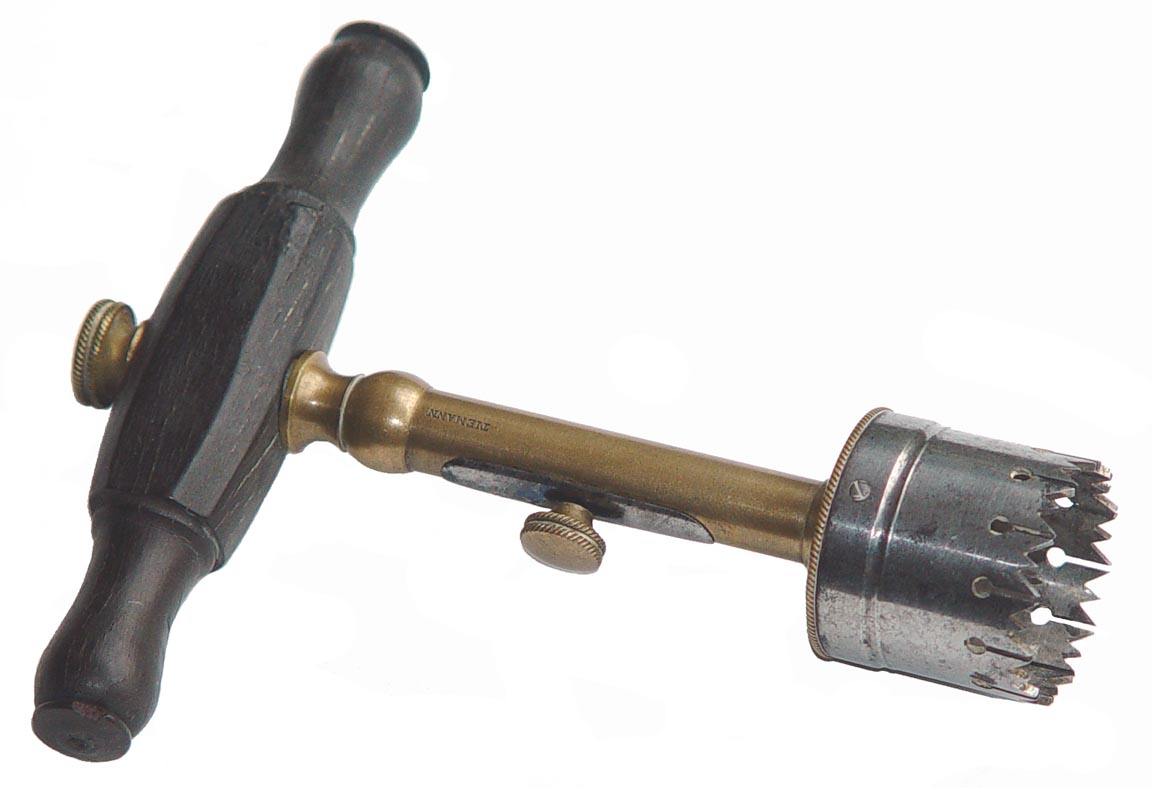
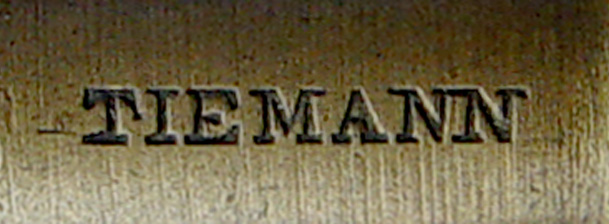
A c. 1850 antique neurosurgical trephine with turned-horn handle. The brass stem is marked: TIEMANN. George Tiemann was a surgical instrument maker based in New York City and a leading supplier to the U.S. Army during the American Civil War.
____________________________________________________
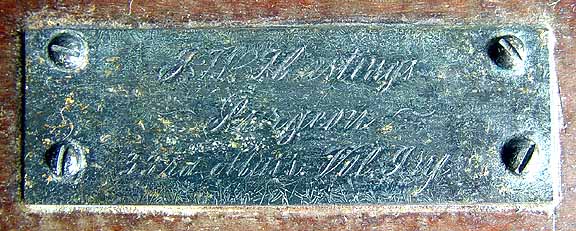
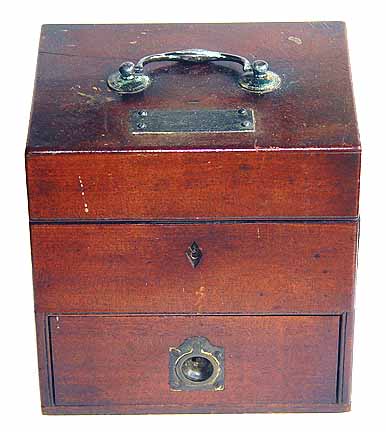
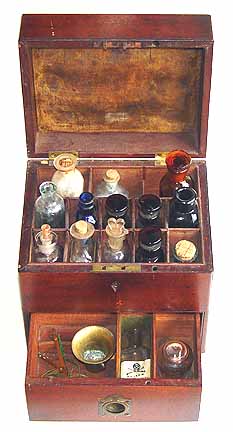
The chest would have probably been given to Surgeon Hastings at the time of his appointment to the 33rd in May 1863. Here is a rare and bona fide Civil War surgeon's medical chest...owned by a doctor who would have witnessed many of the major battles of the War.
_________________________________________________
Page 60
1. 2. 3. 4. 5. 6. 7. 8. 9. 10. 11. 12. 13. 14. 15. 16. 17. 18. 19. 20. 21. 22. 23. 24. 25. 26. 27. 28. 29. 30. 31. 32. 33. 34. 35. 36. 37. 38. 39. 40. 41. 42. 43. 44. 45. 46. 47. 48. 49. 50. 51. 52. 53. 54. 55. 56. 57. 58. 59. 60. 61. 62. 63. 64. 65.
Home Page Collecting Alerts Reference Books Wants